Coaching workspace
A toolset for training, tactics, and player development in youth football


Project overview
One platform for training, performance, and player development
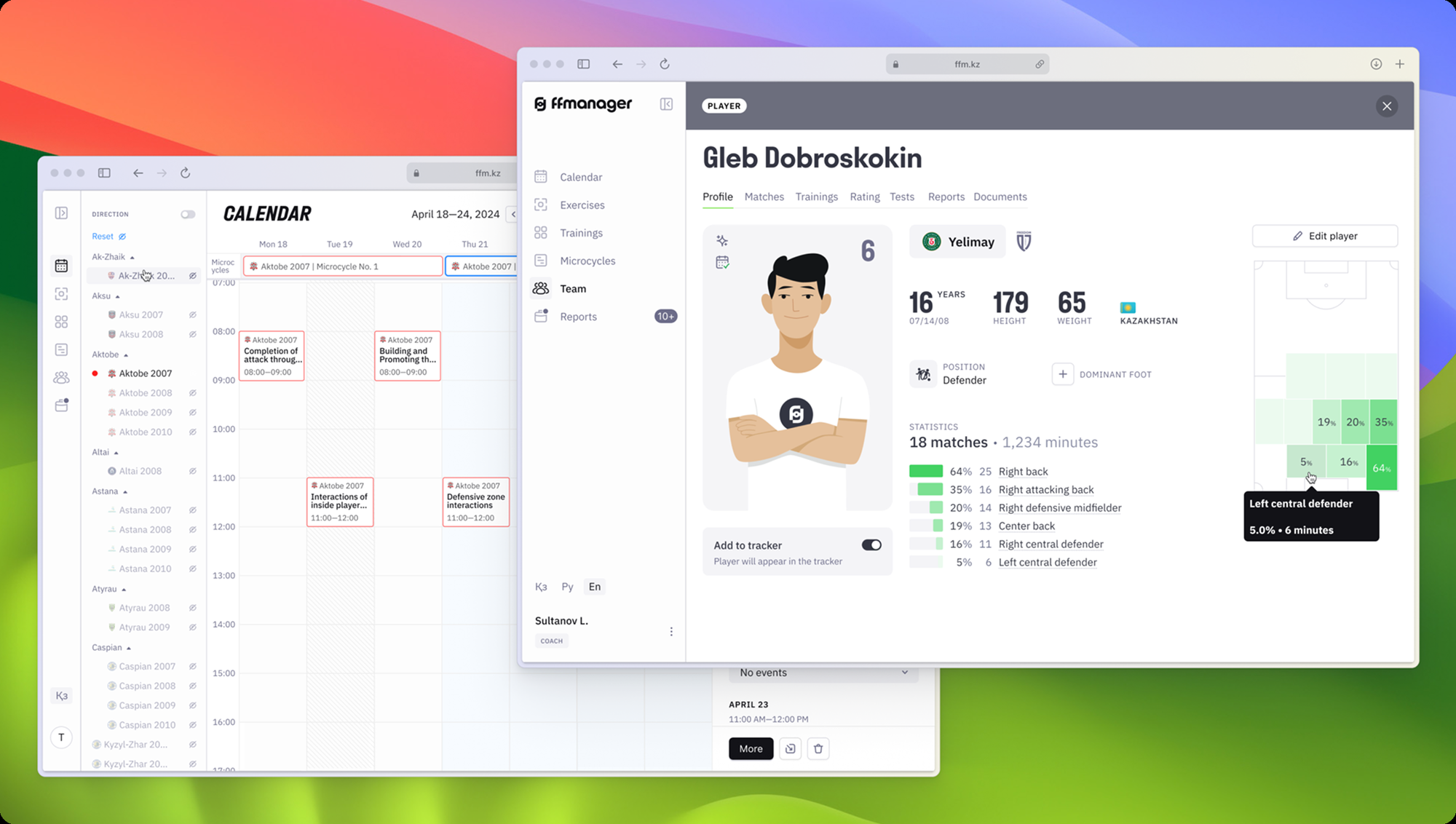
FFManager is a B2B analytics platform for youth football academies — a single place to plan training, develop players, and collect performance data. I designed the entire product from 0→1 as the sole IC designer, growing it from a simple training database into an complex analytics platform used across 24 clubs with 10 user roles. The MVP shipped in 7 months. Product won 16 international awards in its first year.
Problems
Training data lived in notebooks, chat threads, and nowhere else
No system, no single database — planning a single training took 30 minutes. Player assessments got lost — post-training notes and ratings scribbled on notepads, never centralized. No visibility for analysts — the league couldn’t track training load, injury patterns, or methodology consistency across academies.
Our solution
One product, built in three waves
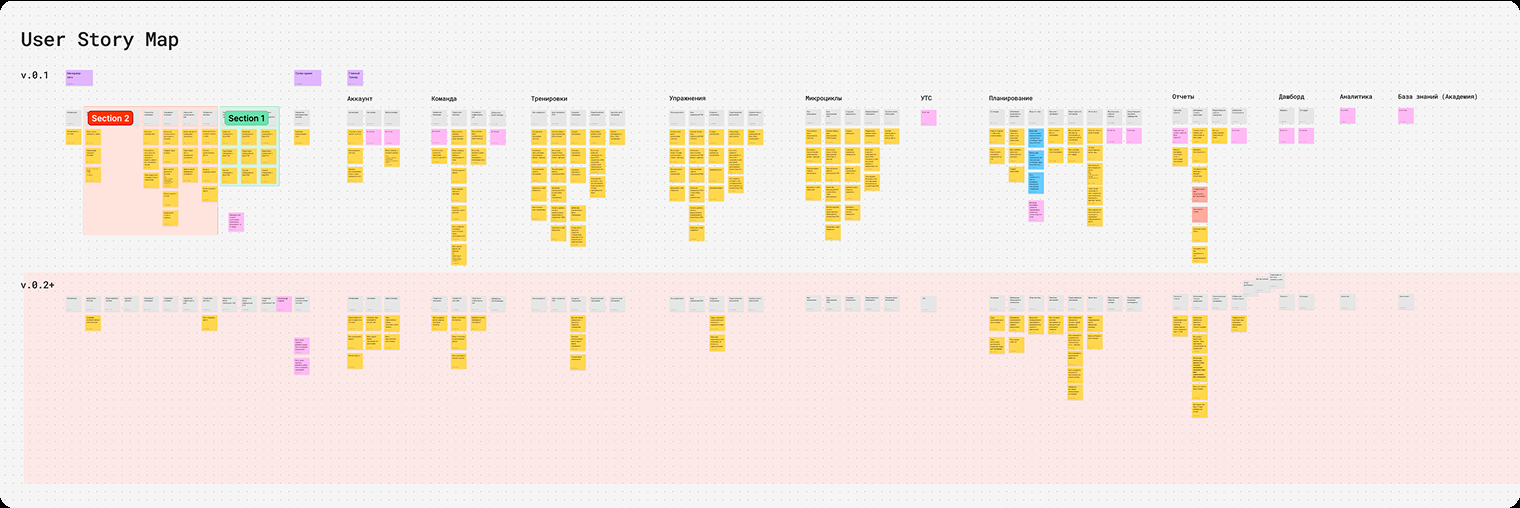
The product grew in three waves, each built on the last. First — get everything into one place, giving coaches a reason to open the platform every day. Then — start collecting data from everyone, with zero friction. Finally — make that data smart, pulling analysis in from expensive third-party tools.
1. Build the base, get coaches in
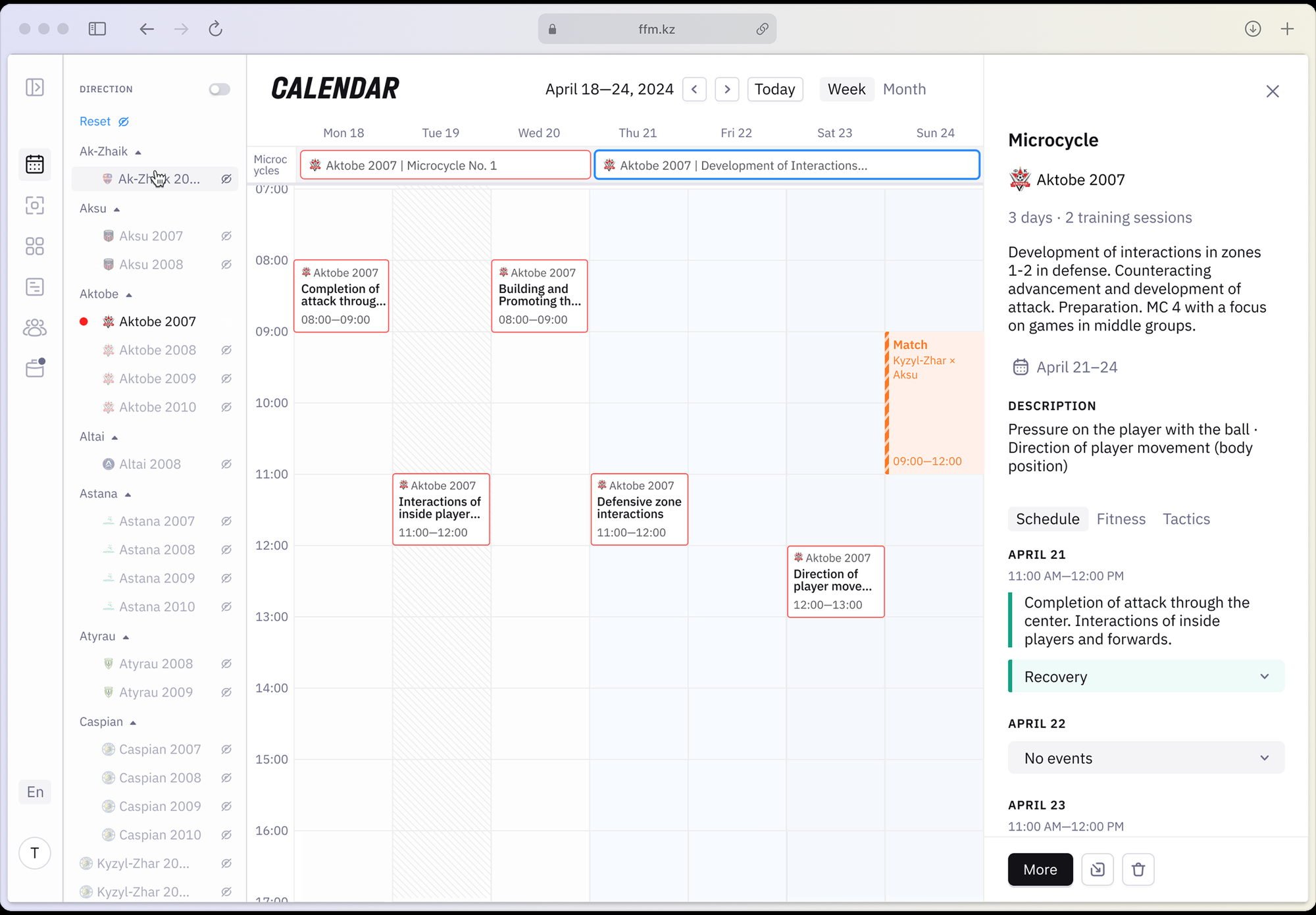
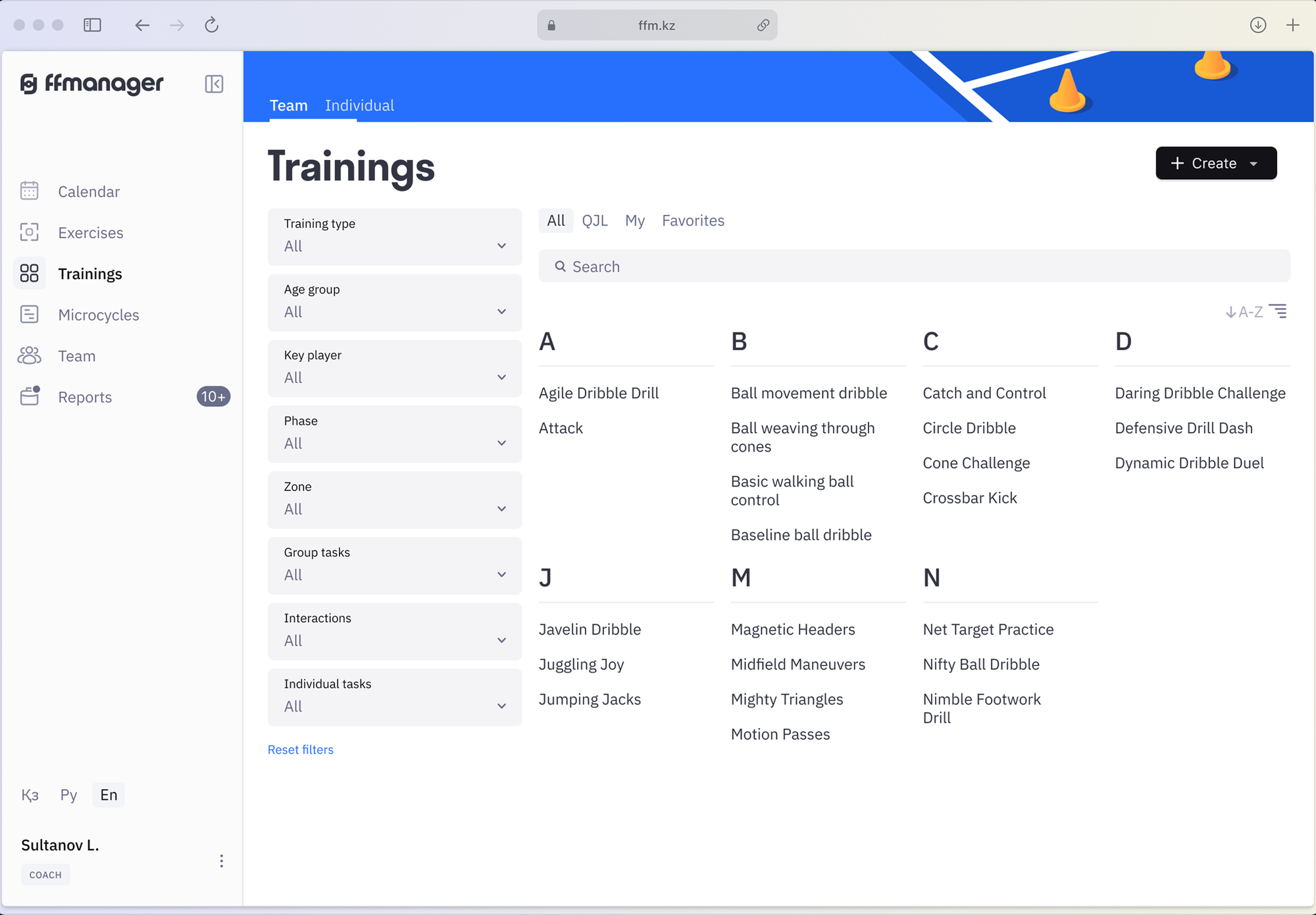
A structured exercise database built to FIFA standards, and a calendar as the coach’s main workspace — three views (week, month, year) holding trainings, matches, and microcycles. The hardest piece was microcycles: containers grouping sessions into a training block with a goal, built straight from the calendar. The year view shows load and fill rate at a glance, so coordinators can read a coach’s planning discipline without opening a single session. Result: Session planning dropped from 30 minutes to 3–5.
2. Start collecting data
Once coaches were in, the goal became simple: capture as much as possible, from everyone, with zero friction. Players joined as a full role — profiles, post-training reports, daily wellness check-ins. All reporting for coaches, players, and analysts moved to Telegram: the bot pings after each session and every morning, and the report takes seconds. Three months in: >12,000 daily wellness reports and >10,000 post-training reports from players alone.
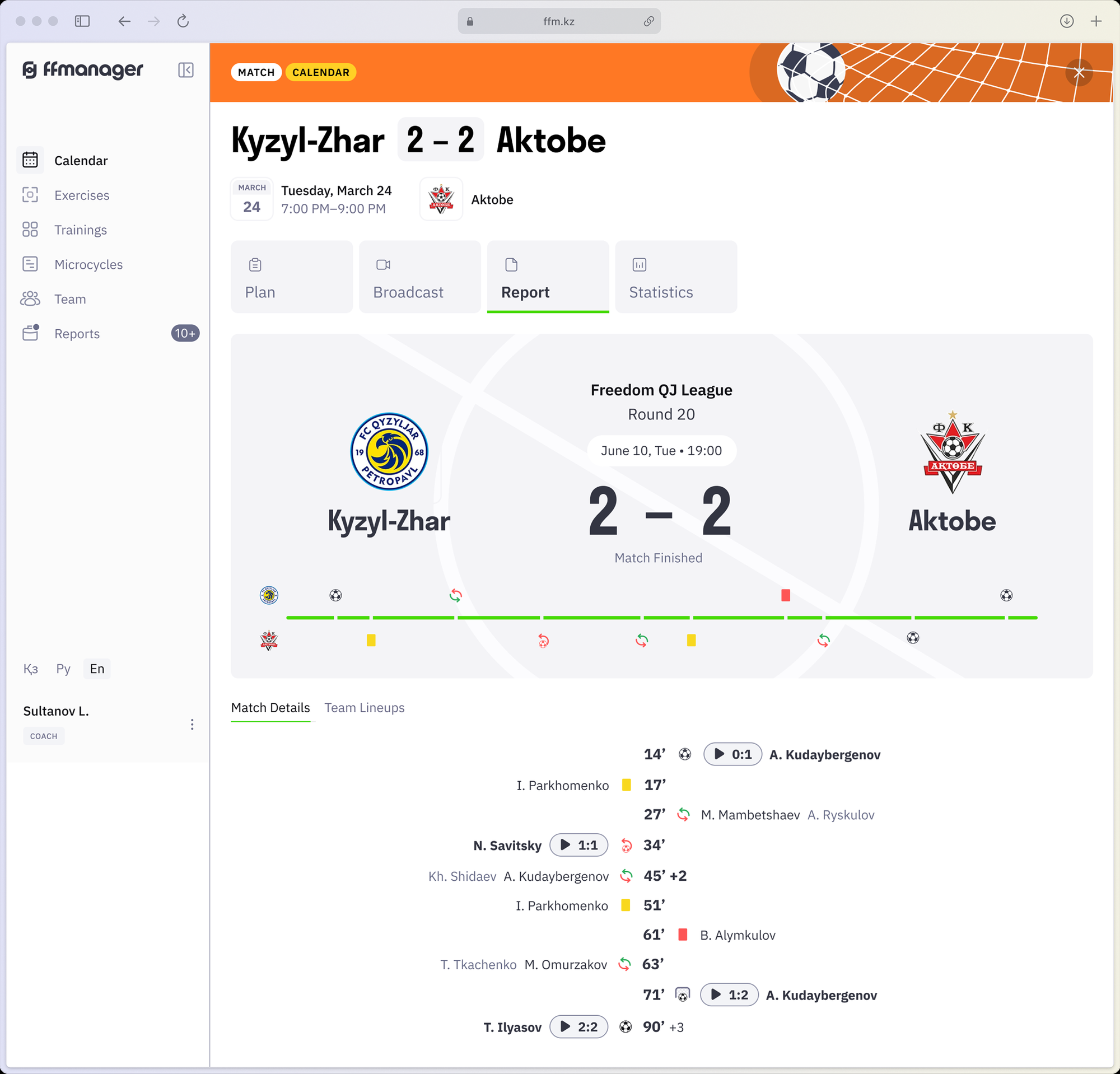
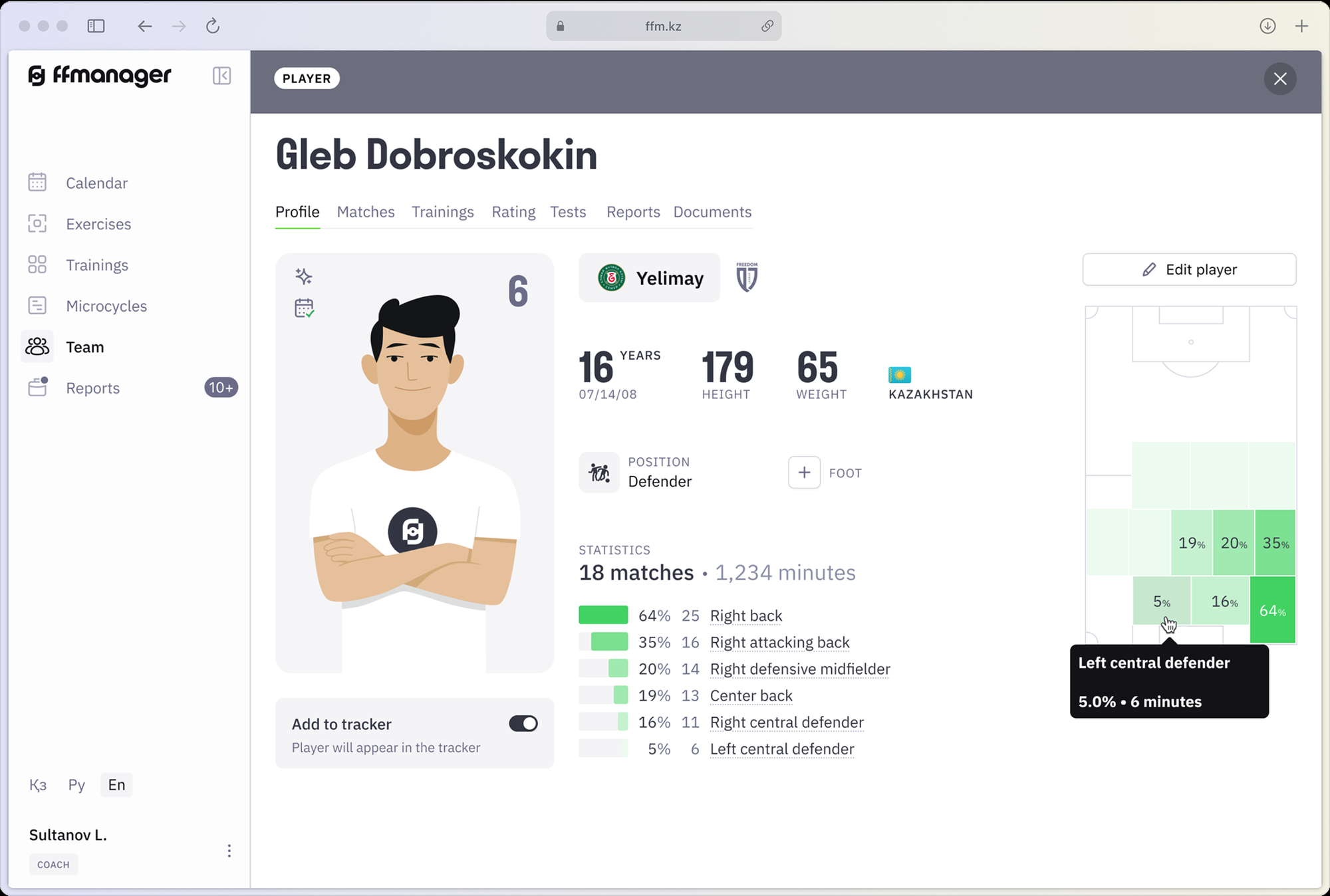
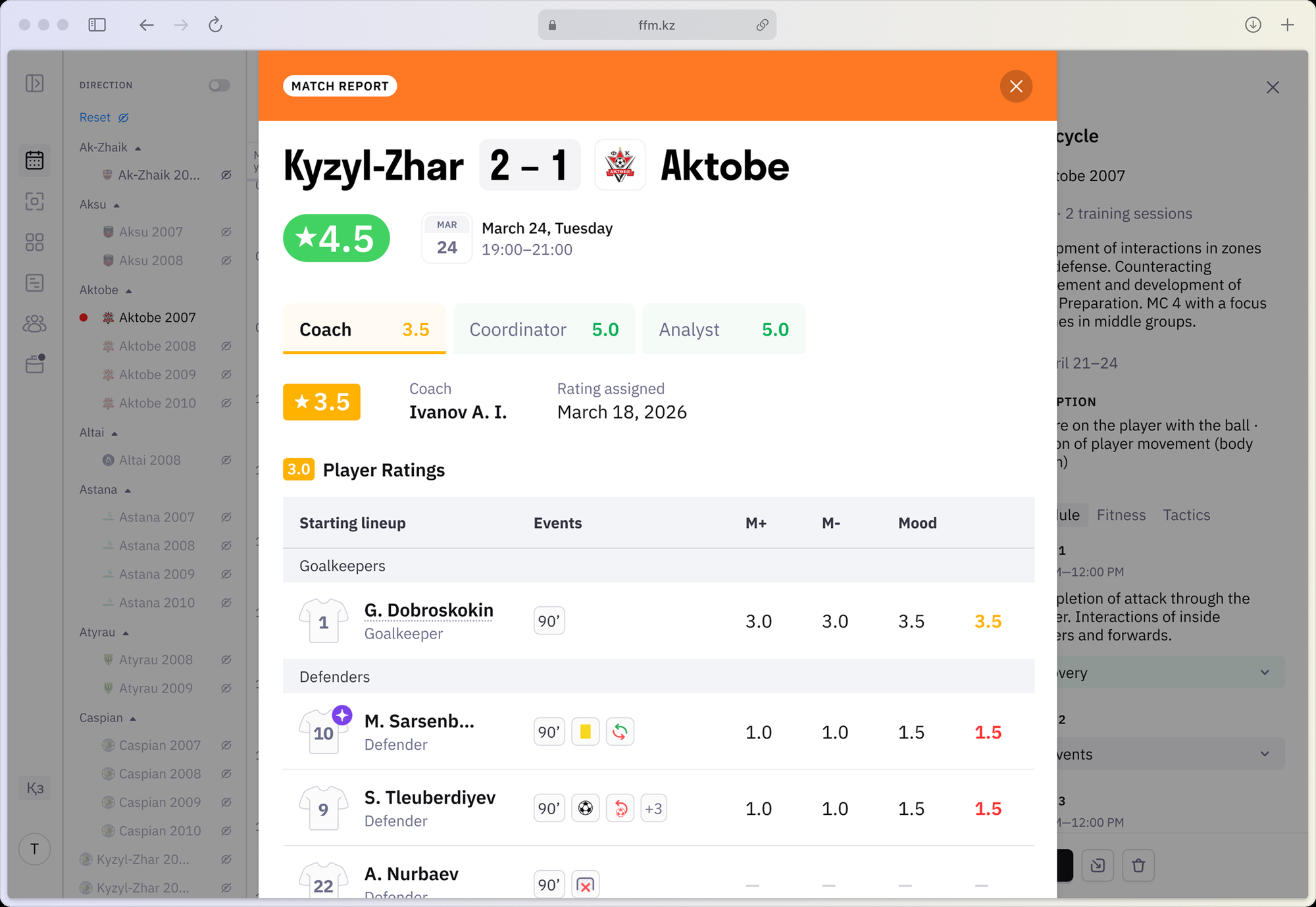
3. Make the data smart
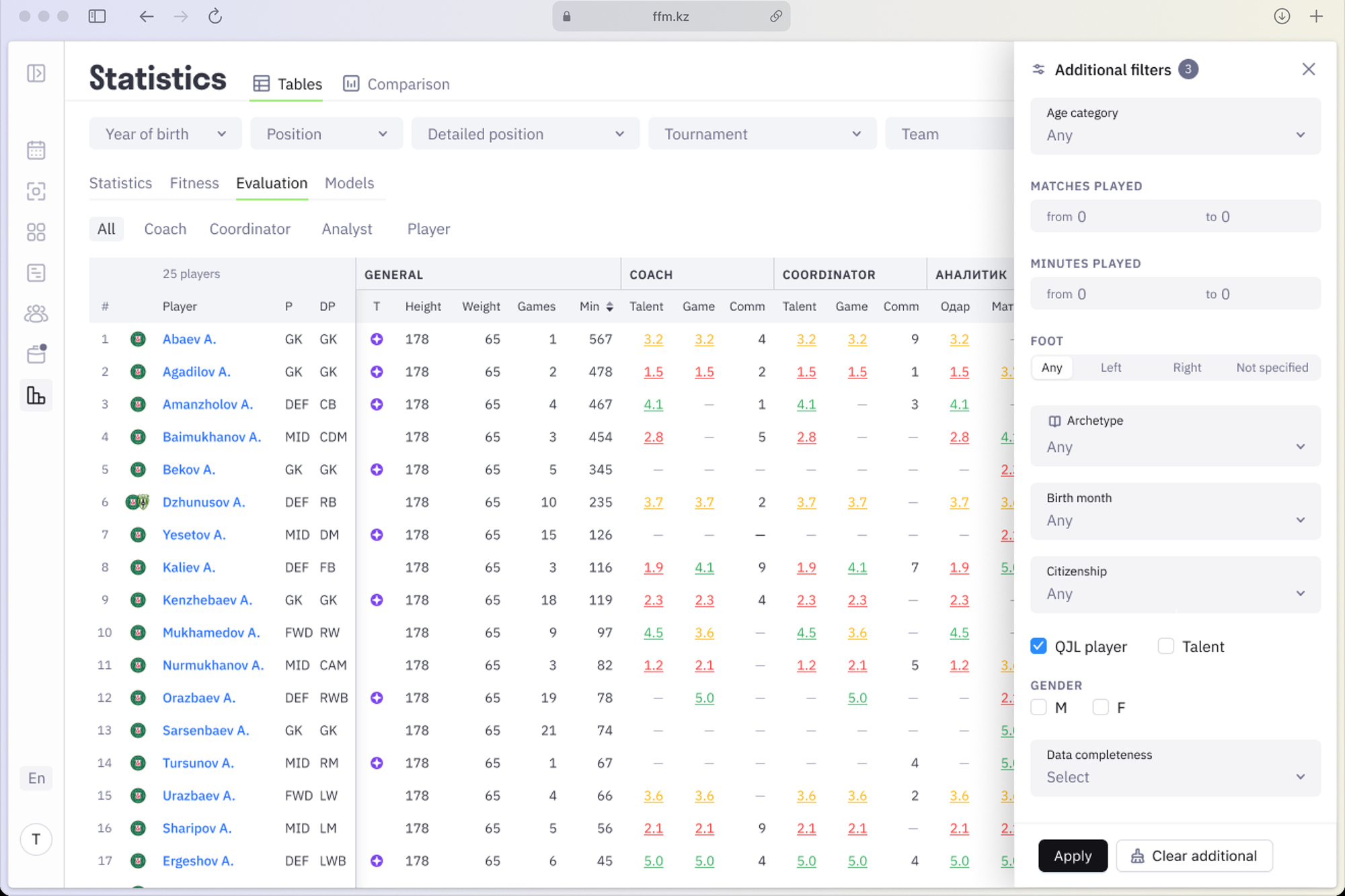
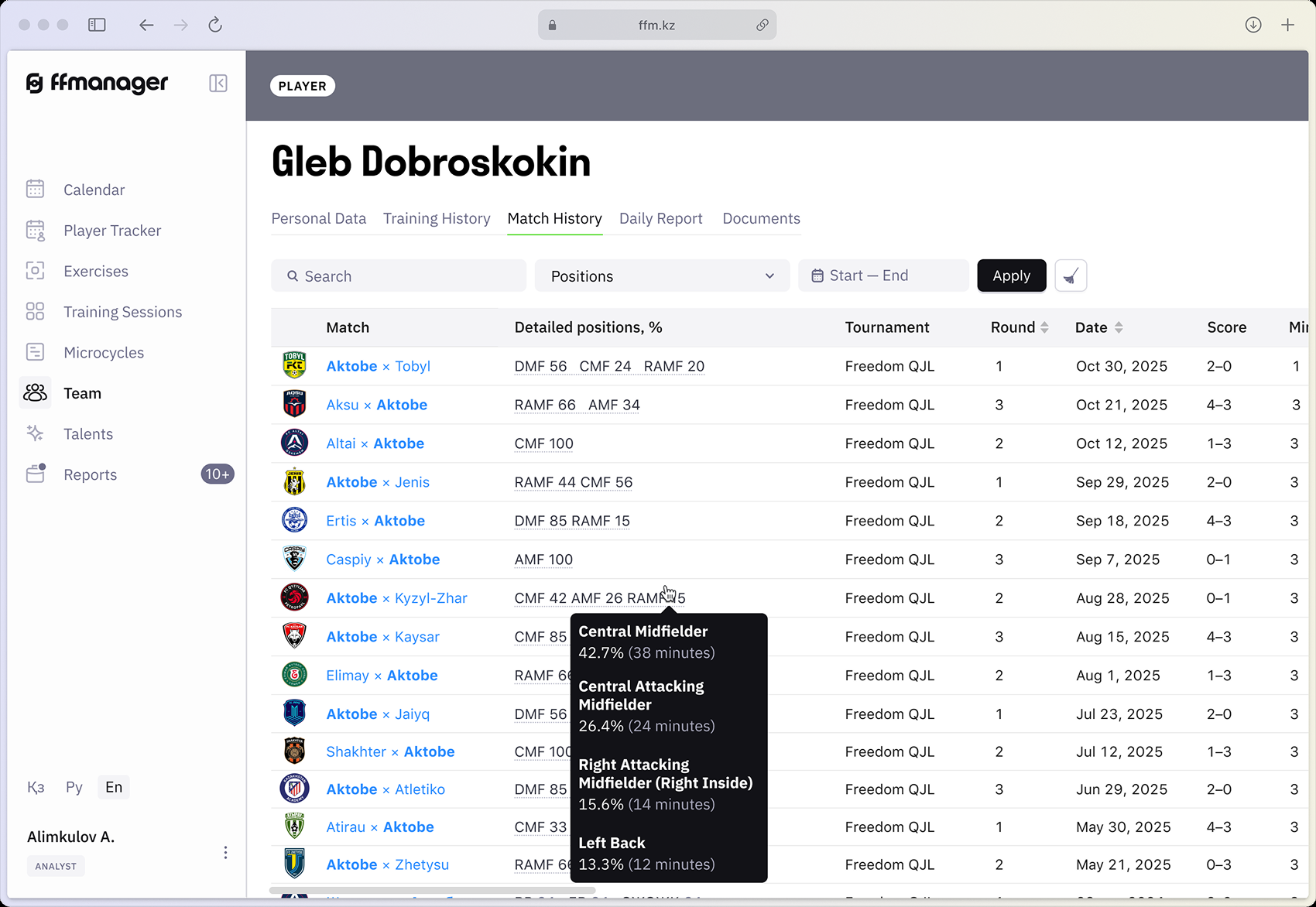
With data flowing in daily, the platform could stop just collecting numbers and start making sense of them. Instead of raw totals, coaches and analysts now saw meaningful metrics — broken down, compared, and visualized as charts, not just rows in a table.
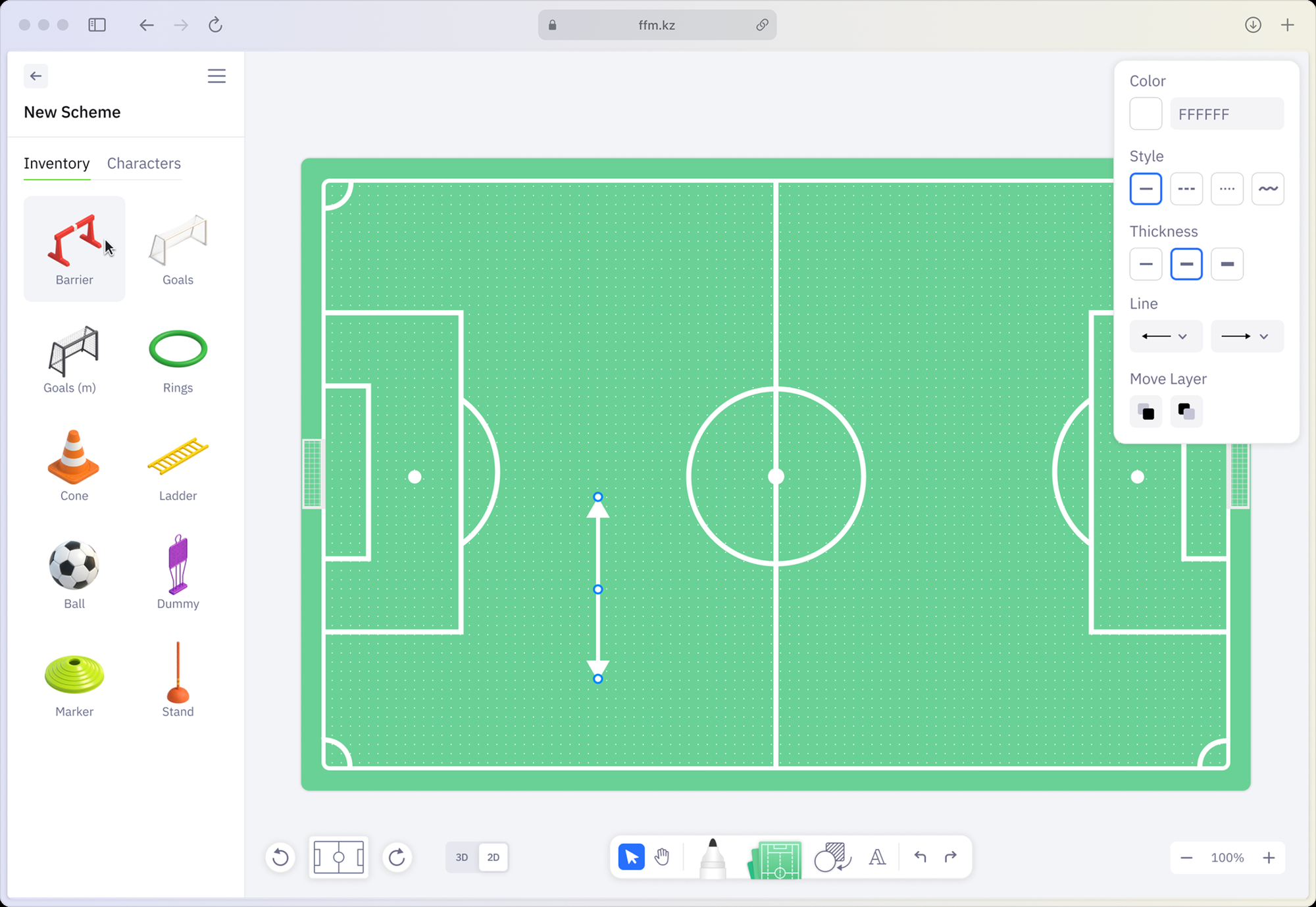
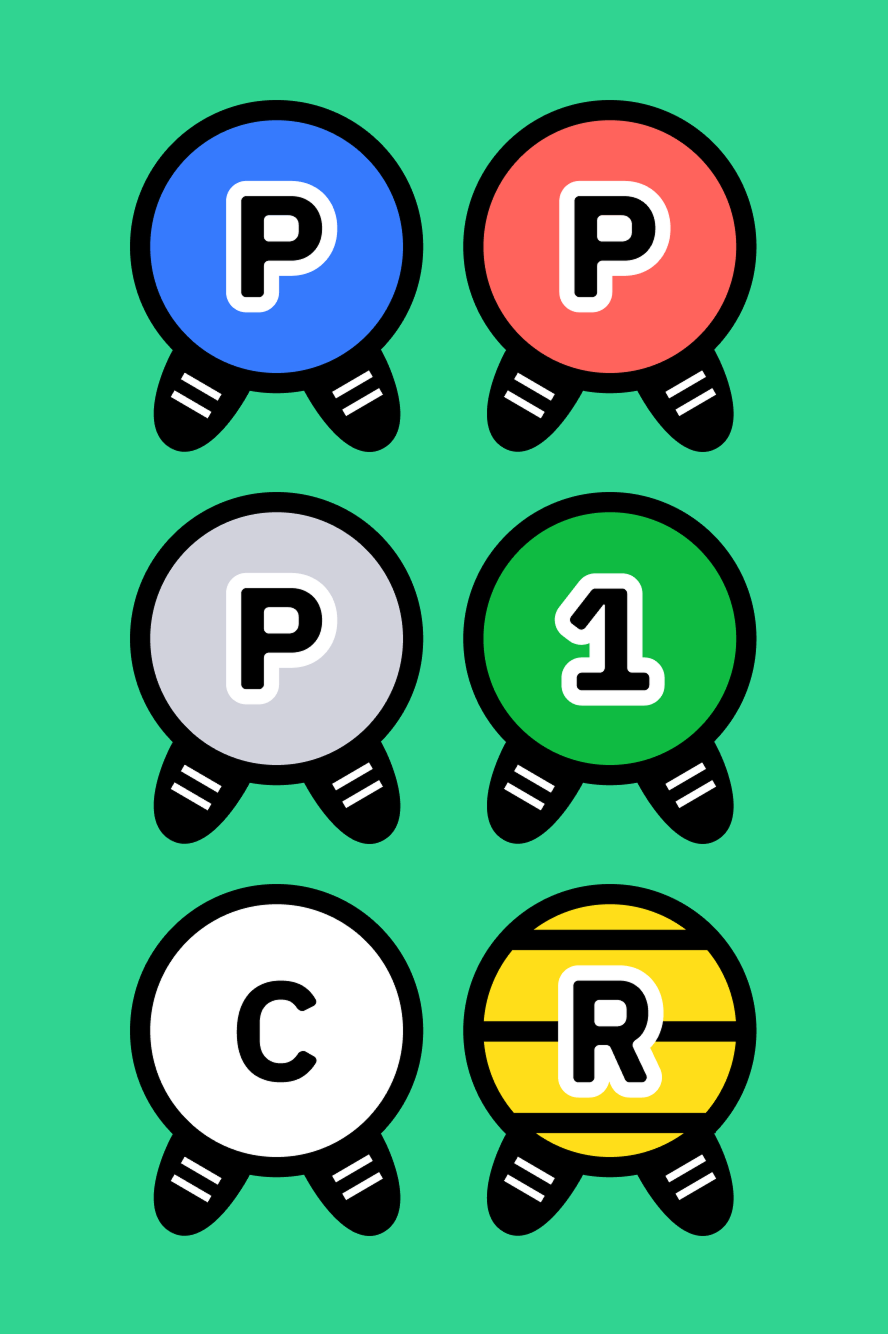
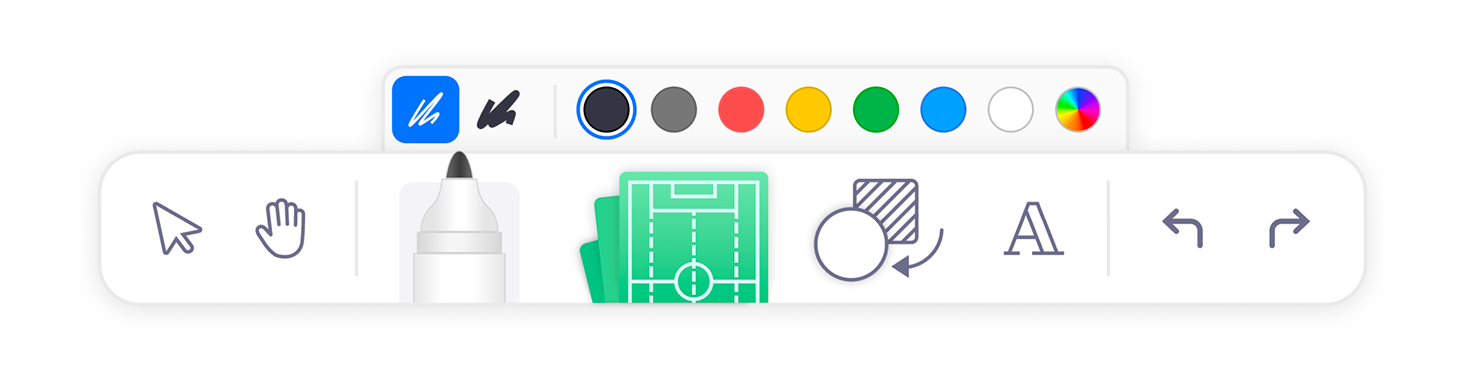
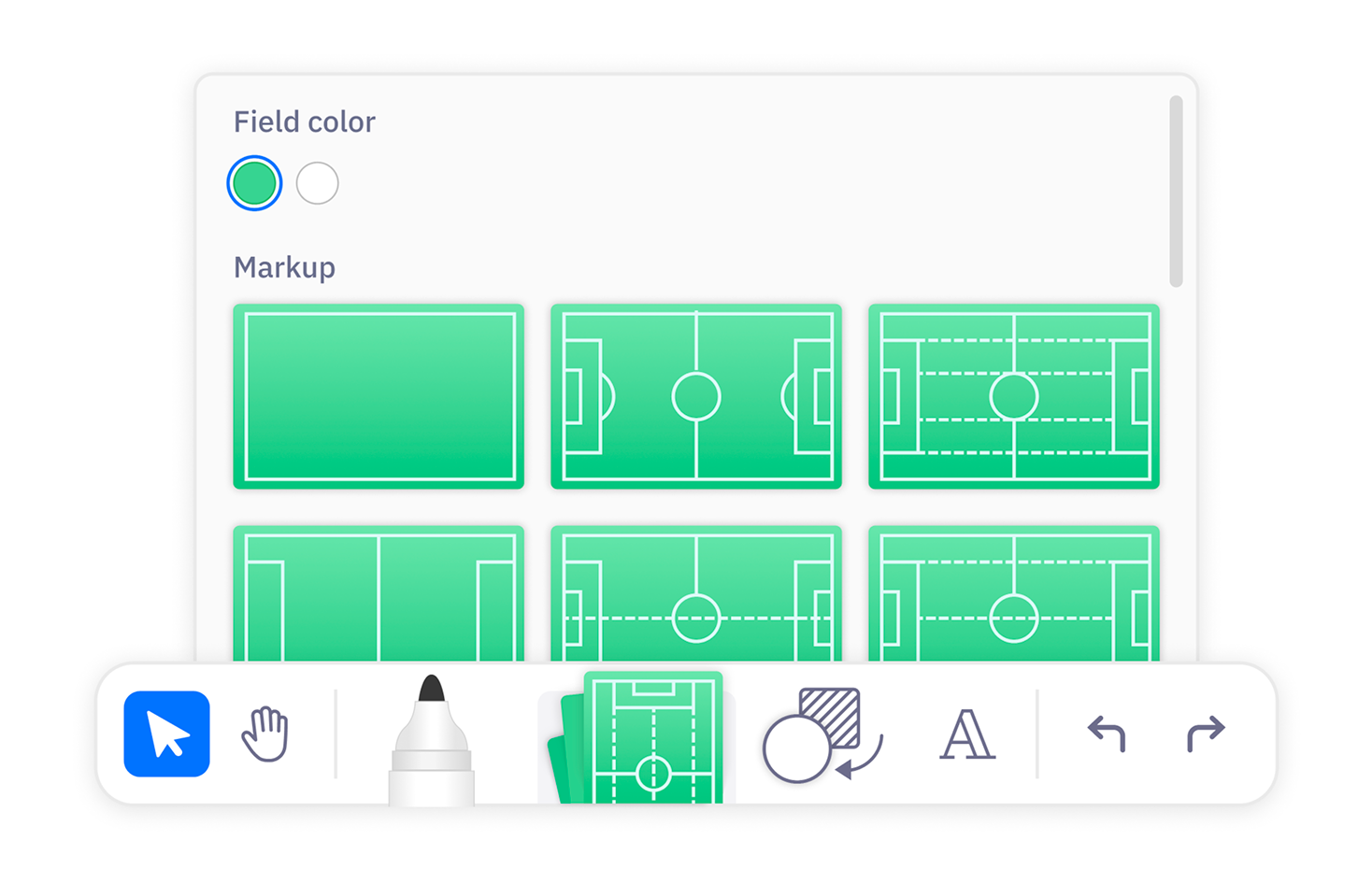
I designed a built-in tactical drawing board with football-specific elements — field zones, arrows, player positions — so coaches no longer needed clunky external tools. Smart cameras streamed footage tied to specific trainings and matches for automatic video review.
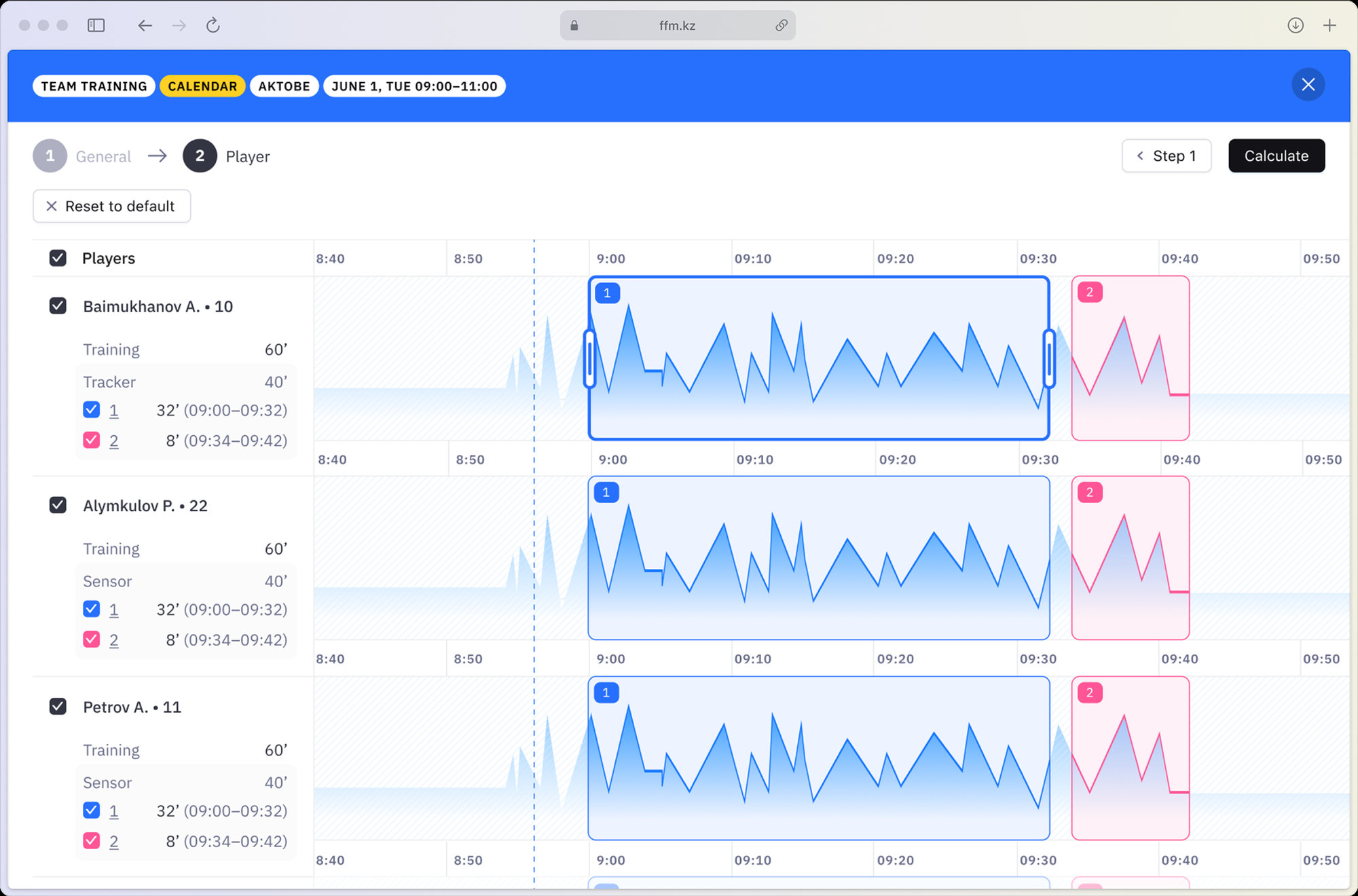
GPS trackers were the clearest example of the shift. Clubs already owned expensive sensors, but the data lived in someone else’s software and Excel — one raw file per player, from device on to device off. I designed the loop from device to player card, and the key step was segmentation: slicing a raw recording into meaningful chunks — first half, second half, drill by drill. The question stopped being “how far did he run” and became “how did he work this specific drill.”
A brand born on the field. By this point I’d gone deep into the product — and it had started living its own life in the media, at events, on social, with no visual language of its own. The rebrand wasn’t in any brief. I proposed it: pitched a concept to the client, got it approved, and led it through to delivery — a system rooted in the coaches’ world of field markings, training gear, and tactical diagrams. It went on to win a Workspace Digital Award. See the full brand identity project
Impact
FFManager grew from a blank canvas into a platform used across 24 clubs, with 400+ user scenarios across 10 user roles — 6 shipped in MVP, 4 added in later phases.
The numbers tell part of the story: thousands of daily reports, planning time cut 6x. But the real proof isn’t on a dashboard — players developed through the league’s system now play for Kazakhstan’s national team and sign with European clubs. In early 2025, 16-year-old Dastan Satpayev, a QJ League academy product, was signed by Chelsea for €4M — the most expensive transfer in Kazakhstan’s history.
16 international awards in the first year — 13 Tagline Awards 2024, 1st place Complex Services & Portals at Workspace Digital Awards 2025, 3rd place G8 Creative Awards Web & App.
“Thanks to the detailed project planning and step-by-step execution, we managed to launch the MVP of a complex product 7 months after starting work — right within the optimistic timeline we set at the beginning. The platform’s simple and intuitive interface helped football coaches quickly get the hang of a completely new tool and start using it in their daily routine for planning and analyzing training sessions right after launch.”
 Yuriy Voropaev, CPO QJ League
Next project