Educational Platform
Replacing scattered communication for Russia’s largest online IT university
Project overview
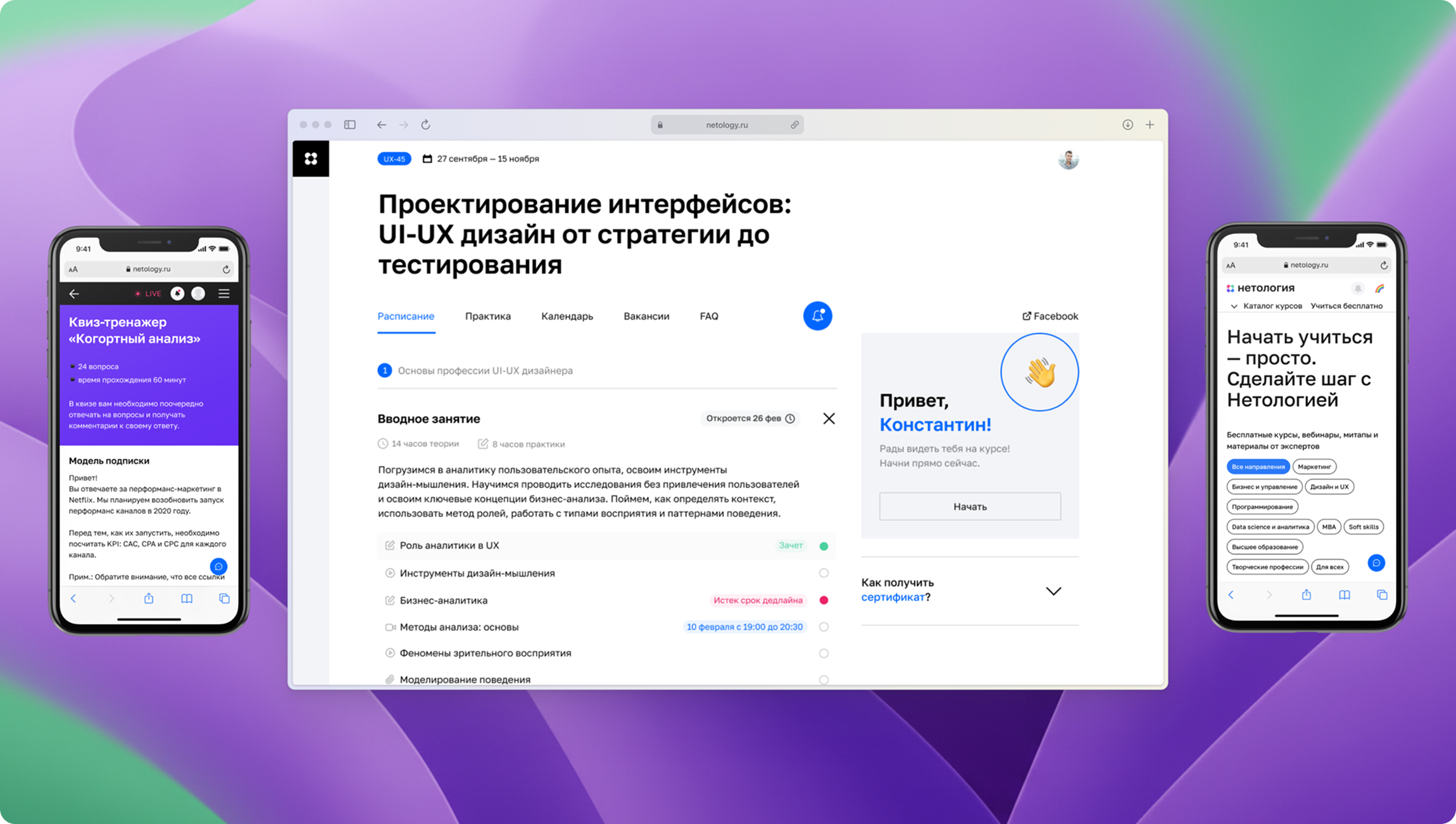
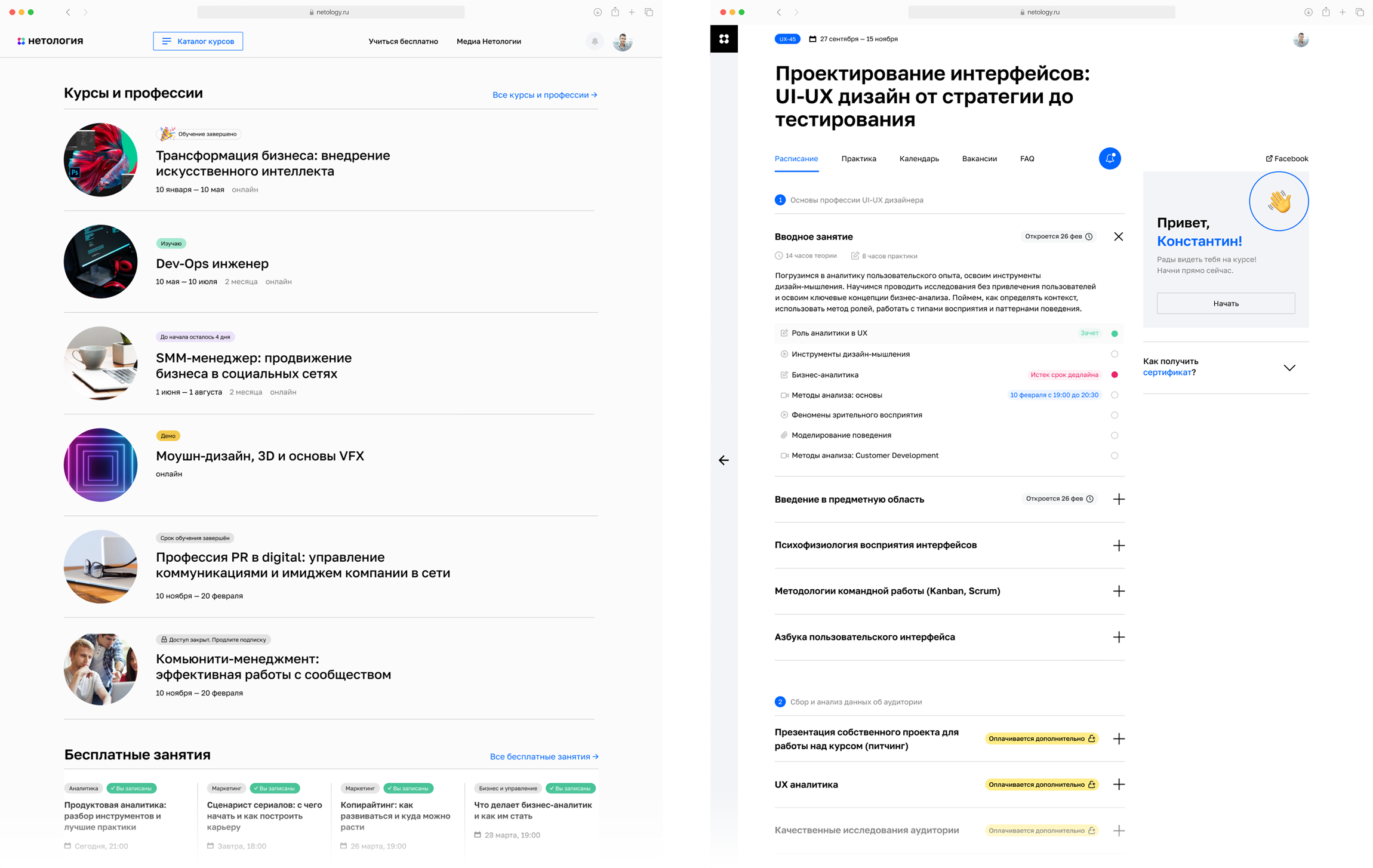
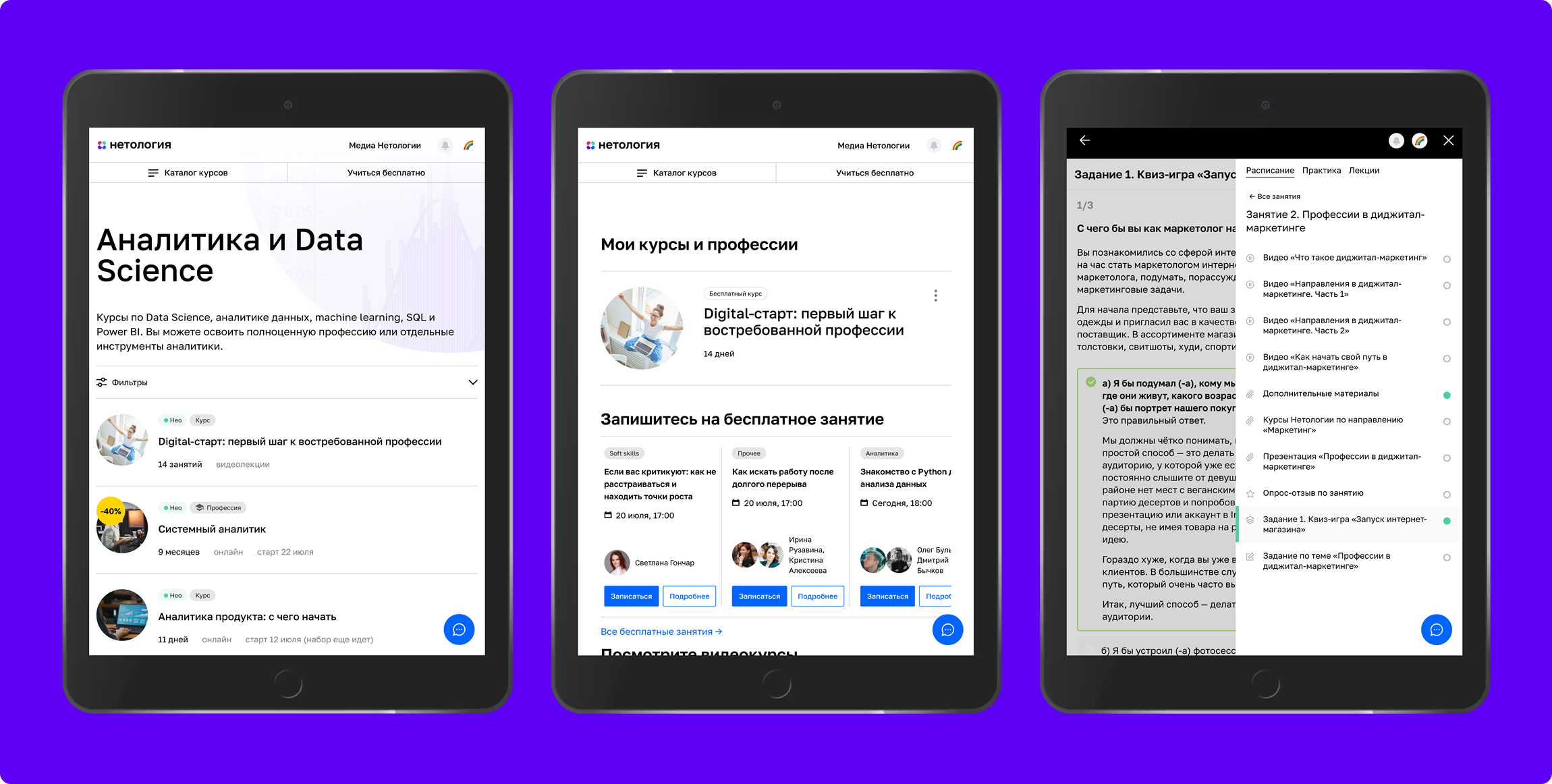
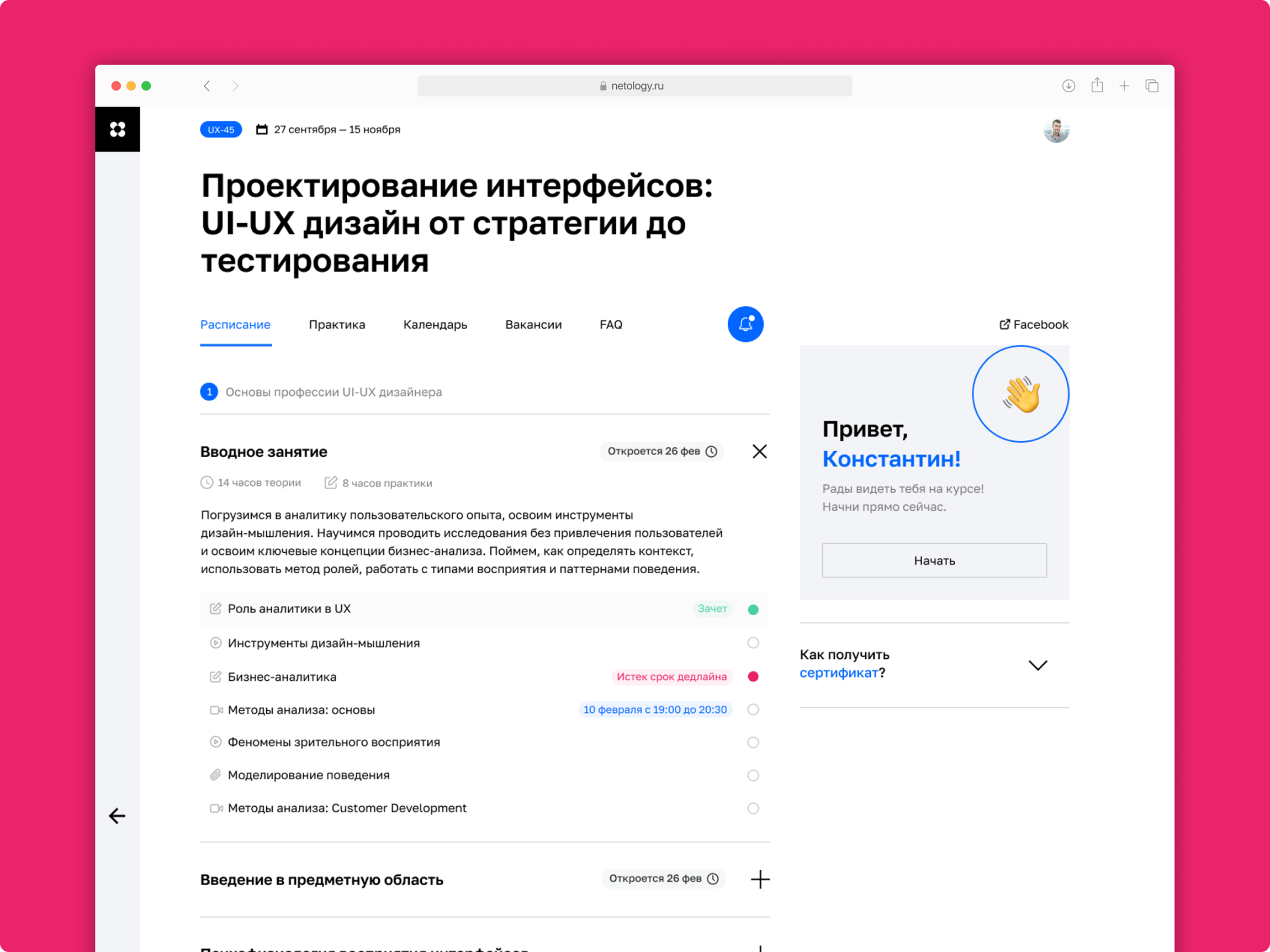
Netology is the largest online university in the Russian-speaking market, training specialists for the IT industry — 130K+ students at the time. As Senior Product Designer, I owned the design of a new in-platform messaging system that replaced scattered, slow support with a single fast channel between students and coordinators.
Problem
Student support was scattered across email, Telegram, WhatsApp, and Facebook, plus an expensive third-party help desk that didn’t fit the team’s needs. Requests fell through the cracks, the average response time was around 36 hours, and managers had no way to measure operator performance or student satisfaction.
Our solution
An in-platform messaging system
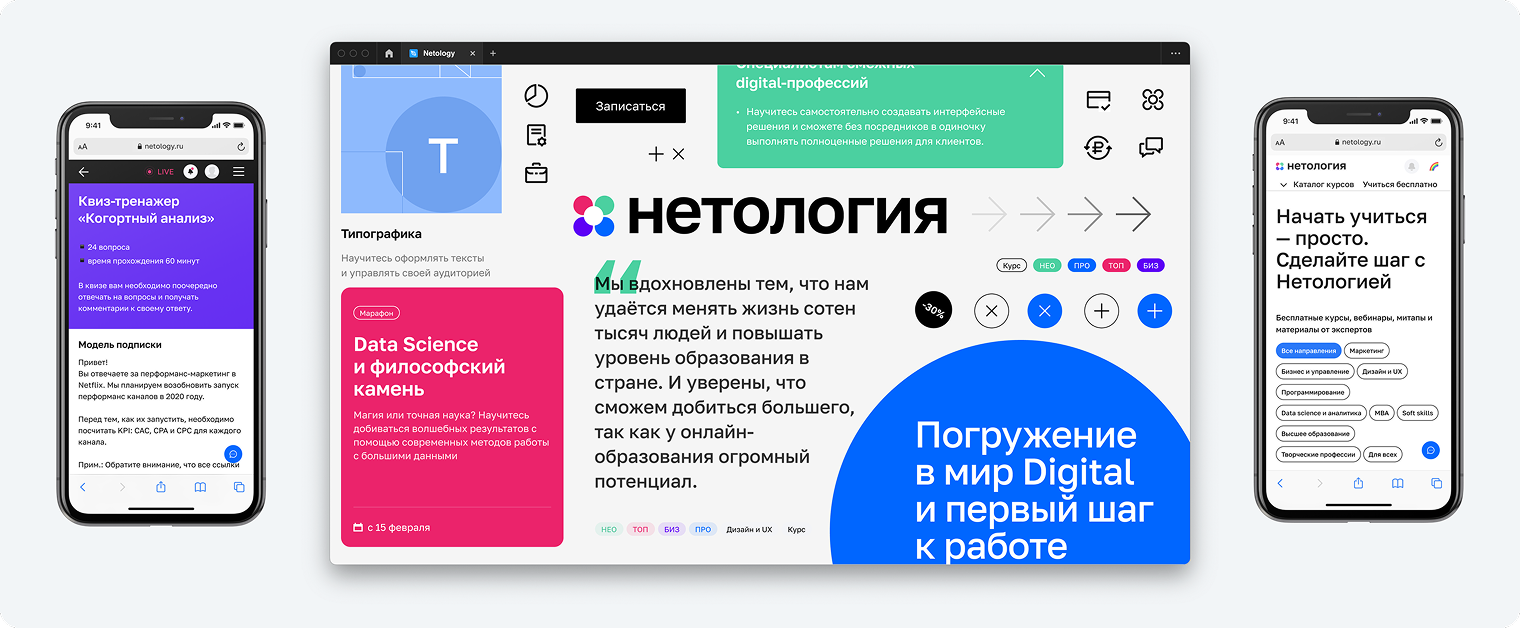
We replaced the scattered channels with a single ticket system built into the platform. It started as an MVP — a quick experiment to see if an in-house tool could beat the expensive third-party help desk — and grew into a standalone product. The system had two sides: a chat-like interface for students, and a workspace for support operators.
Process
Start with the student side. The ticket system had two interfaces, and I designed the student one first — it’s what shapes every request that reaches the team. I made it feel like a chat: the student picks one of six topics, then answers a few light questions that quietly route them to the right operator. It reads like a conversation, not a form. Testing with real students, no one got stuck — and I gave the bot a character friendly enough to forgive the occasional freeze.

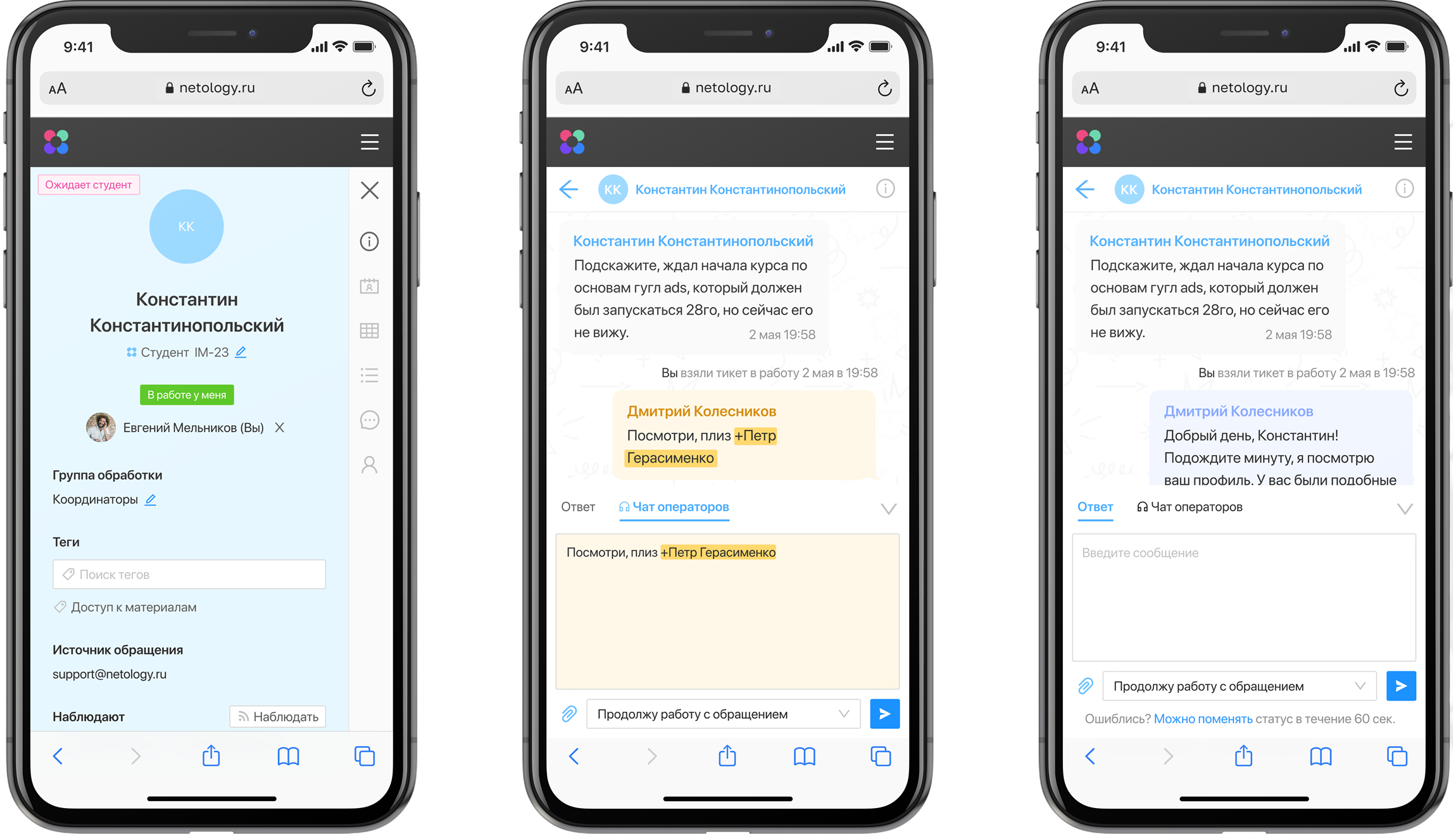
For the operator side, I interviewed 2–3 people from each team — technical support, sales, and learning coordinators — and turned their most pressing needs into a first iteration: one unified inbox with context on every student (the page they wrote from, their courses, past conversations). Result: once the MVP shipped, average response time dropped from 1.5 days to a few hours, and operators asked us to keep building.
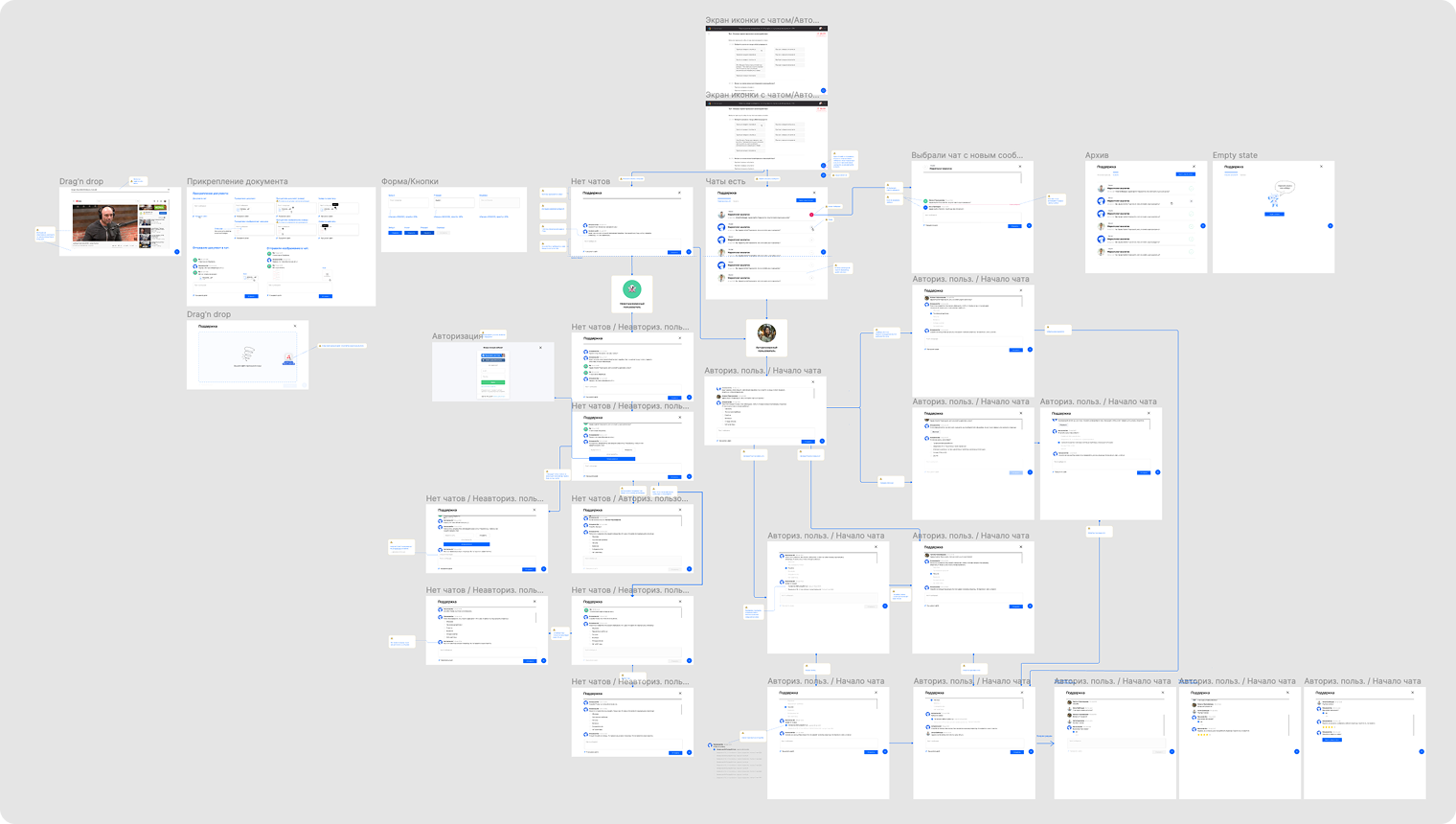
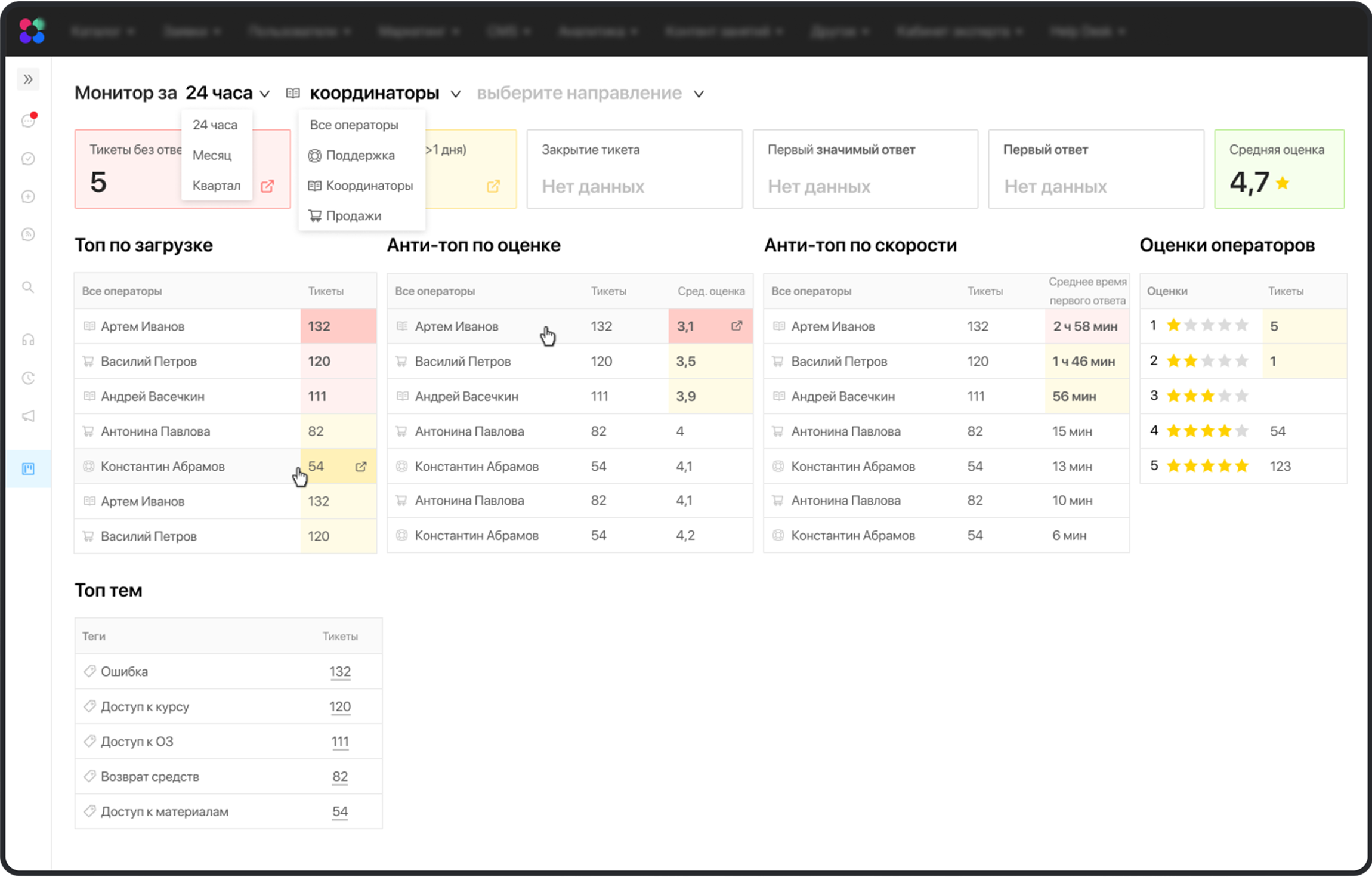
Next iterations and results. Over seven sprints in three months, I added a performance dashboard driven by student feedback, multi-chat handling, a Jira integration, an operator-only chat, mobile interfaces, and course-performance stats. Two months after launch, average operator response time was under 30 minutes.
Impact
The MVP experiment became the platform’s standard support channel — no more expensive third-party help desk. Average response time went from ~36 hours to under 30 minutes, operators got real visibility into their workload and satisfaction scores, and a tool built in three months grew into a standalone product the team kept investing in.
Next project